What Should Businesses Include in Their 2027 IT Budget?
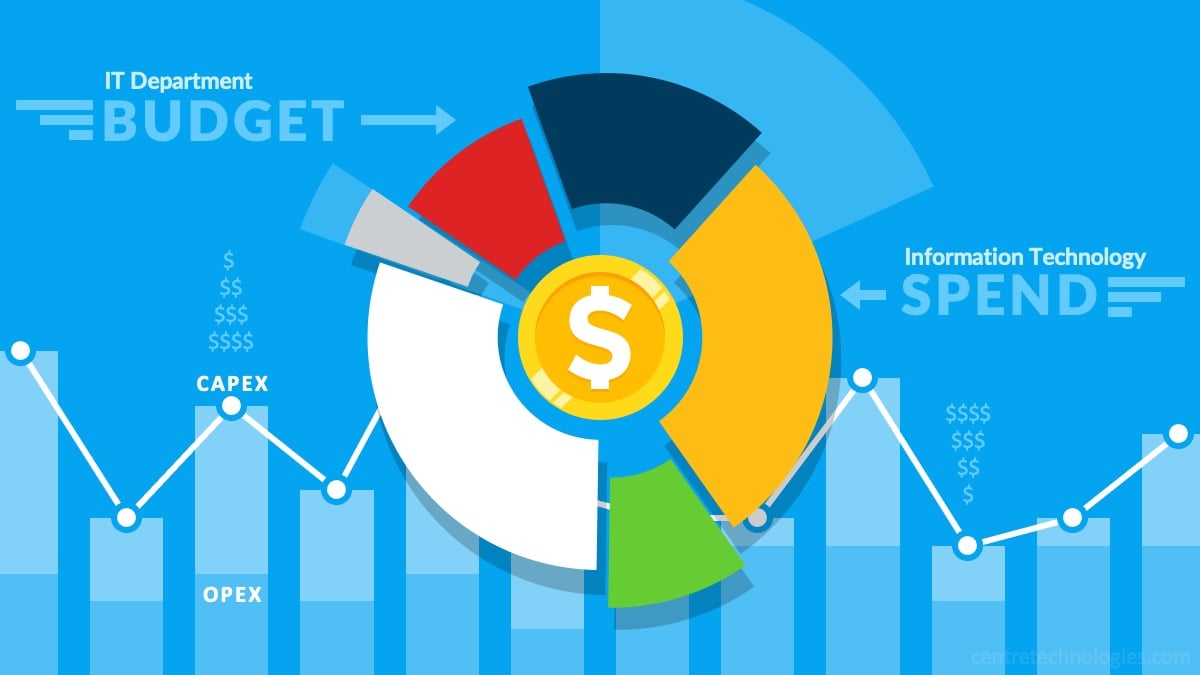
It's that time of year again and you're probably scrambling to create a budget for all your current or planned partners in the new year. As we review trends from last year, we recommend your 2027 IT budget to cover what your business needs to operate today while preparing for changes in cybersecurity, AI, cloud usage, and aging technology. Those costs are changing quickly. Gartner forecasts worldwide IT spending will reach $7.35 trillion in 2027, up 15% from 2026, with particularly strong growth around AI infrastructure, software, and cloud services. Don't read that as meaning your business needs to increase its IT budget by 15%. It means last year's budget may no longer be a reliable blueprint. As you plan for 2027, start with these five priorities.
Included in this 2027 IT budget breakdown:
- 5 Questions to Asks Before Adding New Technology to the 2027 Budget
- Budgeting for AI in the New Year
- Big 3 Things Every IT Budget Should Include: Cybersecurity, Cloud/Infrastructure Changes, and BDR
- Here's the Steps to Prioritize for 2027 IT Budgets
- Common FAQs We Get Every Year When Budgeting for IT
What Existing Costs Should You Budget for in 2027?
The decisions you make for your IT budget impact more than just your IT department or compute components. You should first consider what fits into the company’s goals, especially when you want to invest in new technologies like AI (more on that later).
Start by understanding what you're already spending and whether you're still getting value from it.
Review your current contracts, software licenses, cloud usage, support costs, and equipment replacement needs. Look for expenses that will change in 2027 rather than automatically carrying the same numbers forward. Your IT department will know this.
Aging technology is already influencing budgets. In a 2026 Spiceworks and Aberdeen Strategy & Research survey, 55% of companies said they planned to increase IT budgets, with outdated infrastructure among the top reasons for those increases.
Before adding new technology to the budget, ask:
- Which systems will need to be replaced or upgraded?
- Which contracts or licenses are renewing?
- Are we paying for technology employees no longer use?
- Are there recurring IT problems costing employees time?
- Will planned business growth change what we need?
This'll give you a realistic baseline for 2027.
How Should You Budget for AI in 2027?
Budget for the business outcome you want from AI, not just the cost of buying an AI tool.
AI is booming and there's no surprise that it needs a place in the 2027 budget, but that doesn't necessarily mean purchasing licenses for everyone. Start with defined use cases. Isolate places where AI could save meaningful employee time or improve an existing process. Then determine what it'll take to introduce that technology responsibly (key word).
However, the reality is, the true cost of AI can go well beyond a subscription.
- BCG reports that AI can introduce costs for new platforms, data, integrations, governance, licenses, and consumption
- The FinOps Foundation also cautions businesses against budgeting around model or token costs alone, estimating those expenses may account for only 10% to 25% of the total cost of AI once the supporting costs are considered
-
Basically, your 2027 budget needs to account for the complete AI project implementation rather than just a tool.
Proof of value: Start small, define how you'll measure success, and expand the investment when the results justify it.
The Big 3 Things to Watch in your 2027 IT Budget
How Much Should Cybersecurity Factor Into the Budget?
Cybersecurity needs to be treated as an ongoing business expense rather than something you fund after a problem occurs. AI makes this especially important heading into 2027.
BCG's 2026 research found that 83% of cybersecurity leaders were spending more on cyber, and more than 80% expected their budgets to continue increasing into 2027. At the same time, AI itself introduces new security considerations. Gartner forecasts global spending specifically on securing AI will reach nearly $4.8 billion in 2027, a 68.7% increase over 2026.
So, if your budget has money for AI adoption, there should also be a conversation about protecting that investment.
Review whether your 2027 plans adequately account for identity protection, security monitoring, employee awareness, data protection, and emerging AI risks. The goal isn't to buy more security products, but to understand how your risk is changing and then budget accordingly.
Cloud and Infrastructure Cost Changes in 2027
Review both cloud consumption and aging infrastructure before setting next year's number.
Gartner forecasts infrastructure-as-a-service spending will grow from $292 billion in 2026 to $367 billion in 2027. For businesses already using Azure or other consumption-based cloud services, actual usage can make your spending different from what was originally budgeted. That makes 2027 a good time to ask whether your current environment still fits your business.
- Don't keep aging infrastructure simply because you've already paid for it
- Don't automatically assume everything should move to the cloud
Instead, determine which approach provides the right balance of performance, reliability, security, and cost for what your business needs next. This is also the time to identify equipment reaching end of life so an emergency replacement doesn't become an unplanned expense later.
Budgeting for Backups, Recovery, and Support
Budget around the cost of keeping the business running, not just the cost of maintaining technology.
Consider what would happen if an important system went offline tomorrow. How long could employees work without it? How much data could the business afford to lose? Who would be responsible for restoring operations?
Those answers should help shape spending around backup and disaster recovery.
Apply the same thinking to IT support. If your internal team spends most of its time maintaining current systems, consider whether they have enough capacity to take on the projects you're budgeting for in 2027.
A new AI initiative or cloud project may look affordable on paper. It becomes more expensive when the business doesn't have the resources needed to support it. Managed services help fill those gaps without requiring the business to build every capability internally.
Steps for Prioritizing Your 2027 IT Budget
You don't have to fund every technology initiative at once. When reviewing your proposed budget, put each investment through three simple questions:
- Does this keep the business running or reduce meaningful risk?
- Does this directly support a 2027 business goal?
- Can we measure whether it's producing value?
If an investment doesn't clearly satisfy one of those needs, take another look before committing budget to it. This is especially important for AI. New technology can be exciting without being the right investment for your business right now.
Centre Shows You How to Budget for 2027 Technology
Next year's budget shouldn't be last year's spreadsheet with a few new line items.
Start by understanding what you're already paying for. Plan for technology that needs attention before it becomes a problem. Account for cybersecurity as risk changes. And if AI is part of the strategy, budget for what it will actually take to make that investment useful and secure. Most importantly, connect every major technology investment back to a business need.
Centre Technologies can help you evaluate your current environment and build a technology roadmap that identifies what needs attention now, what can wait, and where your 2027 budget can make the greatest impact. Our customers are not just numbers: they're a part of our DNA. If you don’t know how to budget your 2027 technology investments, contact a member of Centre Technologies today.
Other FAQs We HEar About IT Budgeting Every Year
How much do managed IT services cost?
The usual answer is it varies based on the size of the business and level of support required. A 2026 survey of 412 MSPs and buyers found fully managed IT averaged $145 per user per month, while co-managed IT averaged $85 per user per month. However, Centre's Secure Managed Services combine day-to-day IT support with security and proactive consulting, which help businesses address gaps without building every capability internally at a fixed cost that's personalized to your business needs.
"How should I budget for cloud services like Microsoft Azure?"
Verbatim. We get this one a lot because with AI, more people are curious about implication to cloud storage and consumption, too. Cloud budgets should account for expected usage rather than treating cloud infrastructure as a fixed annual expense. Gartner forecasts worldwide IaaS spending will reach $359.9 billion in 2027, while AI-optimized IaaS alone is projected to grow 56.5% from 2026 to 2027. Centre recommends optimizing Azure around the organization's actual requirements because configuration and unnecessary resource consumption can drive up costs.
Is backup and disaster recovery really something to include as a separate budget line?
Short answer: Yes. Backup and disaster recovery should be planned around how quickly the business needs critical data and systems restored after an outage or attack. In 2026, IBM found that the global average cost of a data breach reached $4.99 million, up 12% year over year, with lost business among the factors contributing to higher costs. Centre's Backup and Disaster Recovery service focuses on recovery readiness, including scheduled testing, incident response planning, recovery goals, and immutable backup protection.