
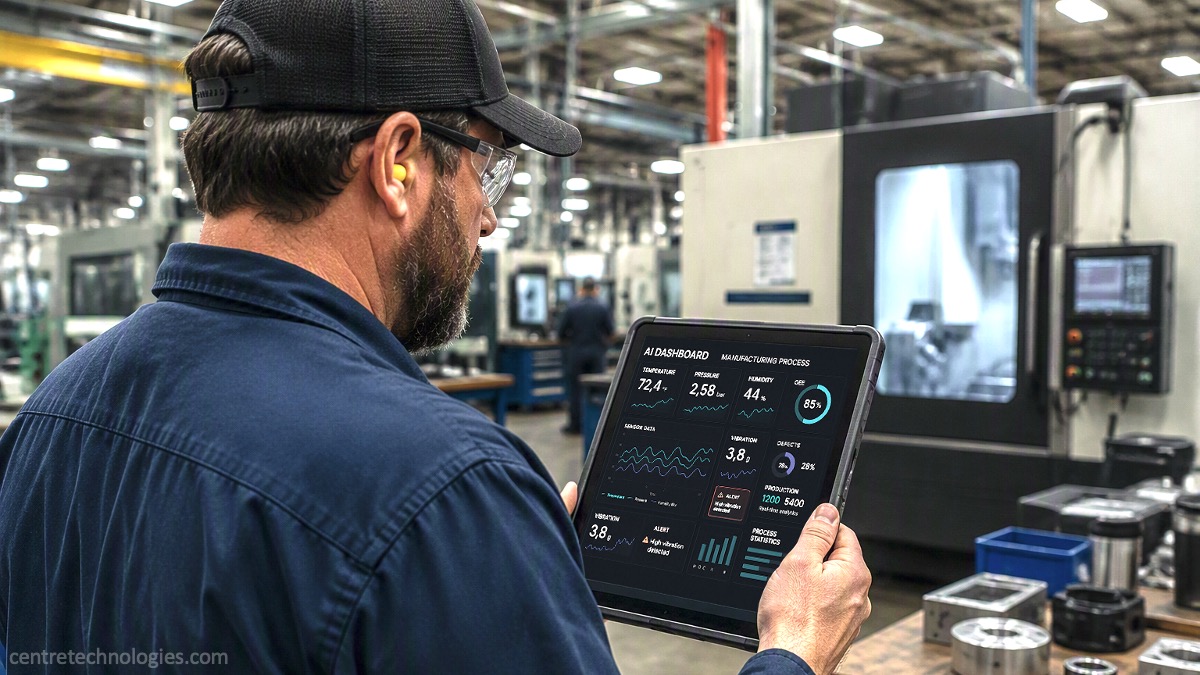
The Automation Conversation in Manufacturing Is Too Focused on AI
From predictive analytics and intelligent reporting to AI-powered assistants and automation tools, manufacturers are increasingly exploring ways to improve efficiency and gain a competitive advantage. Yet many organizations are focusing on AI capabilities before addressing the operational foundations that make those capabilities successful. The manufacturers positioned to benefit most from AI are often the ones investing in the foundations of automation readiness and security compliance long before deploying the latest AI tool.
Here's what to focus on in this article:
- Let's Be Real, You're Already Using AI
- The Problem is Disconnected Systems
- Automation Readiness is More Than AI Readiness
- How to Lay the Automation Readiness Foundation in the Manufacturing Industry
- How to Set Yourself Up for Success in the Future with AI
- YouTube Recap: AI Bootcamp
- Security Compliance Should Be Driving Your Strategy
- Conversations to Start With Before Implementation
- How Centre Can Help You Get Started
Manufacturing Is Already Moving towards AI
AI capabilities are increasingly appearing in ERP systems, business intelligence platforms, workflow automation tools, Microsoft 365, supply chain solutions, and operational reporting systems. As vendors continue to embed AI into the applications manufacturers already use, the conversation has naturally shifted toward what AI can do.
You're looking at benefits like:
- Faster reporting and analysis
- Improved operational visibility
- Streamlined administrative processes
- Enhanced decision-making
- More efficient knowledge sharing
- Reduced manual effort across departments
However, AI is only one piece of a much larger transformation.
The problem with automation isn't a lack of ai systems in manufacturing
When manufacturers encounter operational challenges, the issue is rarely a lack of technology. More often, organizations struggle with disconnected systems or limited visibility into operations due to scattered data sources.
AI can analyze information. It cannot automatically fix years of disconnected systems or inconsistent workflows. That's why the automation conversation needs to be bigger than AI.
Why Automation readiness matters more than ai readiness in the manufacturing industry
Many organizations focus on whether they are ready for AI. A more valuable question may be: Is the business ready for automation? Automation readiness creates the foundation that allows AI to deliver meaningful business value.
Standardized Processes
AI performs best when processes are predictable and repeatable. If departments track information differently or maintain inconsistent documentation standards, automation becomes significantly more difficult to implement and scale.
Before organizations can automate intelligently, they must understand how work actually flows through the business.
Consistent Data
Manufacturers generate massive volumes of data across multiple sources including financial and supply chain. However, inconsistent naming conventions, duplicate records, and disconnected data sources create challenges for both automation and AI. Reliable insights require reliable information.
Meaningful Reporting
Manufacturing leaders rely on reporting to make decisions. Strong dashboards and reporting frameworks do more than improve visibility. They establish the trusted data foundation that future AI initiatives will ultimately depend on.
Integrated Systems
Many manufacturers have accumulated technology platforms over time as they grow. ERP systems, inventory tools, production systems, Microsoft 365 environments, and operational applications often operate independently.
When systems cannot communicate effectively, automation opportunities become limited and AI visibility becomes fragmented.
Successful businesses are focusing on laying the foundations before implementing ai
Some of the most successful manufacturers are not beginning their transformation by purchasing new AI tools.
Instead, they're investing in:
- Modern business systems
- Better reporting structures
- Operational dashboards
- Security improvements
- Workflow automation
Once those foundational elements are established, AI becomes significantly more valuable.
Future automation requires more than technology
As challenges with AI continue to grow, manufacturers need tech strategies that support long-term adaptability.
Future automation is an ongoing journey that requires:
- Scalable technology
- Repeatable processes
- Accessible data
- Clear reporting
- Strong governance
The companies best prepared for future automation are those building operational maturity today.
Why Security Compliance deserves a Seat at the Table
AI and automation conversations frequently focus on efficiency gains while overlooking security implications.
As manufacturers become increasingly connected, business systems become more attractive targets for cybercriminals. The National Institute of Standards and Technology (NIST) recommends organizations establish governance, risk management, and security practices alongside AI and automation initiatives rather than treating them as separate projects. So the reality is, security compliance must evolve alongside automation.
Businesses that integrate cybersecurity into their AI and automation strategy are better positioned to adopt new technologies with confidence.
The conversations manufacturers should be Having
Rather than asking: "Which AI tools should we invest in?", leaders will benefit more from asking:
- Are our processes ready for automation?
- Can we trust the data feeding our systems?
- Do we have visibility into operational performance?
- Are our systems integrated effectively?
- Is our security posture prepared for future innovation?
- How can automation support long-term business goals?
These questions determine whether AI becomes a business advantage or simply another underutilized technology investment.
How Centre Technologies Helps Manufacturers prepare for What's Next
At Centre Technologies, we believe successful AI adoption starts with creating an environment that is ready for automation. That means helping manufacturers establish the foundation needed to support future innovation while maintaining operational reliability and security.
Supporting AI Readiness
AI adoption is most successful when organizations understand their current technology environment, data maturity, operational workflows, and security requirements. We help manufacturers assess and prepare for successful implementation.
Building Automation-Ready Environments
Our team helps organizations design, roadmap, and support modern systems, processes, reporting structures, and dashboards that improve visibility and create opportunities for future automation.
Supporting Future Automation
Automation is not limited to a single platform or technology. We help manufacturers build scalable environments that support ongoing innovation as business needs evolve.
Strengthening Security Compliance
As automation expands, security becomes increasingly important. We help organizations strengthen cybersecurity controls and support the secure adoption of emerging technologies.
Manufacturing's Future Is Bigger than AI
AI will continue to play an important role in the future of manufacturing. But the companies that benefit most may may actually be the ones that focus first on process maturity, system integration, reporting visibility, automation readiness, and security compliance.
Because while AI can help manufacturers work smarter, it is a strong operational foundation that ultimately determines how much value AI can deliver.
We can help no matter where you're at in the AI adoption journey. Contact us if you want to continue the conversation!