The Hidden Challenge Behind AI Adoption in Construction
Construction companies are rapidly adopting AI through the software and platforms they already use, but many are discovering that AI is only as effective as the information it can access. So, what's the challenge behind AI adoption in construction? AI struggles to deliver meaningful insights when project data is scattered across systems or inconsistently managed. The businesses that see the greatest value from AI are those that first standardize their technology, data, and security so information from both current and archived jobs can be found faster and used more effectively. Here's how.
Included in this breakdown:
- You're Probably Using an AI Agent Already, Even If You don't Know It
- The Problem Is, AI Is Only As Good as the Data It Can Find
- How to Get the Most Out of Your Project Management Software Knowledge
- AI Bootcamp: How to Implement AI in Your Construction Business
- Technology Standardization Matters in Getting the Most Out of AI in Construction
- Should You Use Microsoft Copilot in Construction?
- How Centre Can Help You Understand What AI Is Best For You
Construction Companies Already Have More AI Than They Realize
Before AI can summarize project history or provide meaningful insights, organizations need a solid foundation of standardized technology, organized data, and secure systems.
Today's construction software ecosystem increasingly incorporates AI features designed to help users work smarter, not harder . Things like:
-
Document analysis
-
Estimating workflows
-
Project summaries
-
Reporting automation
-
Information retrieval
-
Forecasting and planning
AI assistants like ChatGPT or Claude or (if you're doing business tasks) Microsoft Copilot bring similar capabilities into tools construction teams already rely on.
And the opportunity is exciting. A project manager could potentially ask: "What change orders impacted the final budget on similar projects over the last three years?" or "Summarize the meeting discussions related to this project across Teams, email, and project files."
But for AI to produce useful answers, the underlying information has to be organized and secure.
AI Is Only as Good as the Data It Can Find
Construction companies generate enormous amounts of information. You've got plans, bids, pictures, jobsite notes, contracts, change orders, schedules, client communication, etc. The list goes on.
Over time, that information often becomes spread across shared drives or individual desktops, or really, let's be honest, it's probably in your phone and your project management system(s). As a result, you and your employees frequently spend valuable time searching for information that should be easy to access.
Here's the reality: If your PM or subs struggle to locate a document from a completed project, AI will likely face the same challenge.
AI doesn't automatically fix disorganized information. But it can amplify the value of information that's already accessible, structured, and governed.
The Real Goal Should Be Faster Access to Project Knowledge
For most construction companies, the biggest opportunity is somewhere between running projects and knowing where that project knowledge is best used for maximum output.
Think about the information buried within your software:
-
Client communication
-
Jobsite documentation
- Past bid, proposal, estimate, contract, and invoice information
-
Vendor and subs data
-
Change order history (if they're not stuck in a text somewhere)
-
Safety documentation
-
Project communications
When employees (or your software) can quickly access that information, they make better decisions. It's the same with AI. When agents and assistants can quickly access that information, it becomes a force multiplier.
Why Technology Standardization Matters in Construction
Many construction firms have grown through years of project-based expansion and operational change.
The result is often a technology environment that includes:
-
Multiple file locations
-
Inconsistent project and schedule structures
-
Different communication tools
-
Varying security practices
-
Unclear ownership of information
This creates friction for employees and limits the effectiveness of AI.
Before deploying new AI initiatives, you should ask:
-
Where is project information stored?
-
Who has access to it?
-
Is the information organized consistently?
-
Are permissions configured appropriately?
-
Do teams follow standard processes?
These questions are just as important as evaluating the AI platform itself.
Microsoft Copilot and Construction Is A Powerful Combination
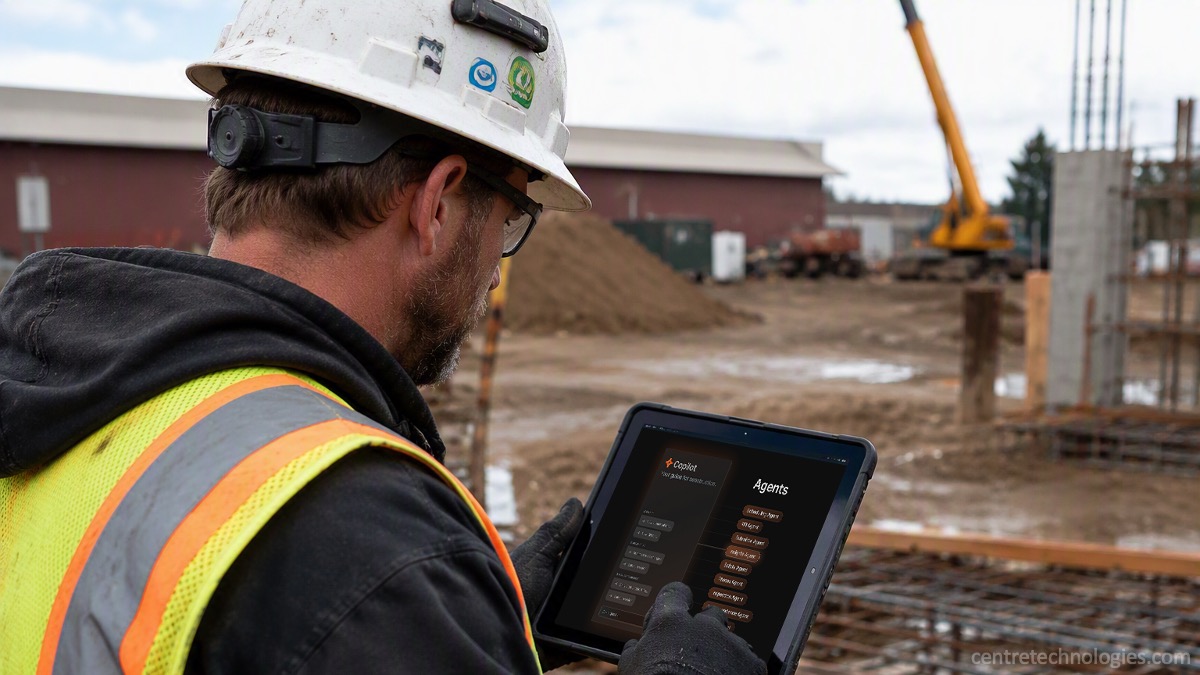
One reason Microsoft Copilot is attracting attention from construction firms is that it works within the Microsoft tools employees already use every day.
When properly configured, Copilot can help users:
-
Locate project information faster
-
Summarize client meetings and communications
-
Draft project updates
-
Analyze spreadsheets
-
Surface insights from organizational data
However, Microsoft's adoption guidance consistently emphasizes data governance, permissions, security controls, and content management before implementation.
In other words, Copilot works best when your Microsoft 365 environment is organized and secure.
But that's really only if you're not using a platform already. Software like Jobtread and Procore already have this built in. Now the goal is, how do I use that AI safely?
How Centre Technologies Helps Construction Companies Unlock AI
Successful AI adoption is about creating an environment where AI can securely access the right information at the right time.
Centre Technologies helps construction organizations:
Standardize Technology
Reduce complexity across systems, locations, and project teams so information is easier to access and manage.
Organize and Govern Data
Create the structure needed for AI tools you already use to locate, retrieve, and use project information more effectively.
Secure the Environment
Strengthen identity management, access controls, Microsoft 365 security, and cybersecurity best practices necessary for responsible AI adoption.
Maximize Existing AI Investments
Whether AI is embedded within your construction software, Microsoft 365 environment, or future business applications, we help make sure the surrounding infrastructure supports adoption and long-term success.
Develop a Practical AI Strategy
Our goal isn't to deploy AI for the sake of AI. It's to help construction companies use technology more effectively to improve productivity and gain faster access to critical business information.
AI Success Starts with the Foundation. Let's get you There.
Construction companies are investing heavily in AI, and many already have AI capabilities built into the platforms they use every day. The real challenge is ensuring those tools can access the right information when it matters most.
Because at the end of the day, the most valuable AI outcome for many construction companies isn't generating new information.
Need help or want to learn more about getting your AI systems properly integrated with your sensitive data? Even if you're just curious about how AI works in your current system like Procore or Jobtread or InEight, let us know. We'd love to make sure it's serving your business the right way.