
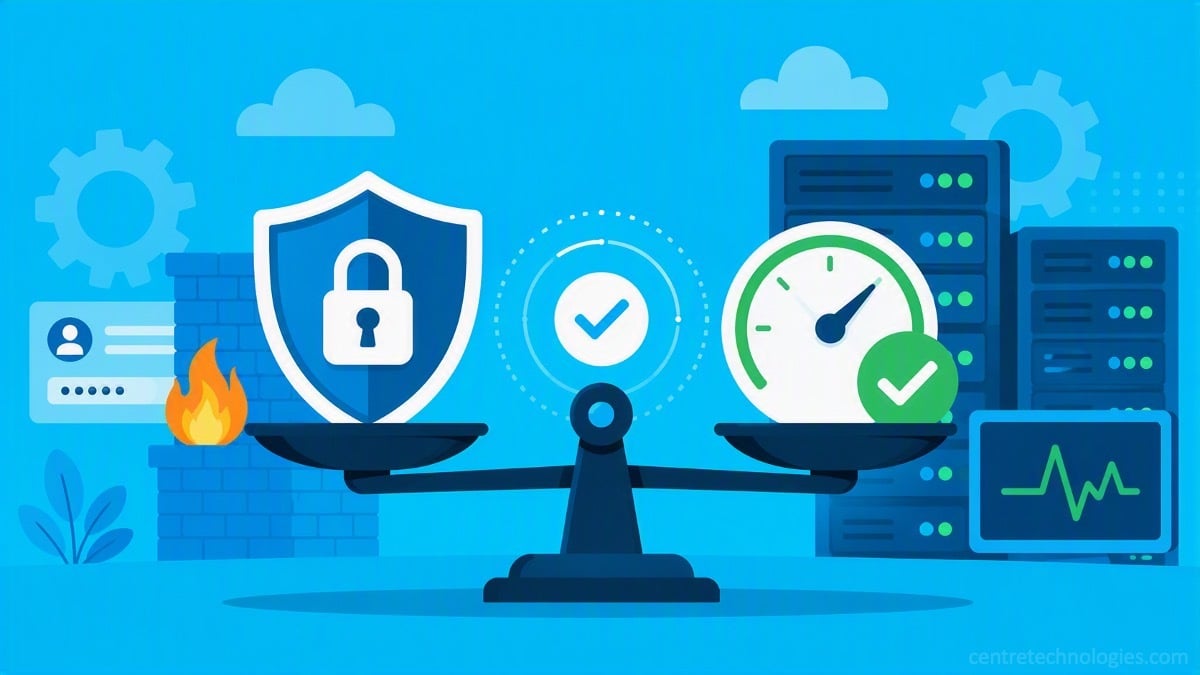
Balancing Security and Uptime in Modern Manufacturing
Every minute of downtime costs money. Production schedules slip. Customer expectations become harder to meet. Revenue can take a hit long before systems are restored. The root cause of all this? Production environments have become more connected while cyber threats have become more disruptive. Recent guidance from NIST says manufacturers need to focus on operational resilience as IT and operational technology become increasingly connected. The goal at the end of the day is to maintain uptime because your security is working.
Included in this guide to security and uptime in manufacturing:
- Uptime is Harder To Protect Than Ever
- The Hidden Cost of Downtime in Manufacturing
- Secure Managed Services Cover It All, Here's How
- How Security Protects Uptime
- How AI Is Raising the Stakes for Manufacturers Across the Country
Uptime is Becoming Harder to Protect
Manufacturing remains one of the most targeted industries because attackers understand the value of staying online. When production stops, financial pressure builds quickly. That urgency creates an opportunity for cybercriminals who know businesses want to restore operations as soon as possible. Manufacturing continues to rank among the industries most heavily targeted by ransomware because downtime has an immediate business impact.
The threat itself is changing as well. Attackers no longer need days to create convincing scams. Microsoft reports that threat actors are using AI to improve phishing campaigns and make social engineering attacks more believable. What previously required significant effort can now be generated in a matter of minutes.
A Fact to Remember
Manufacturing remains one of the most targeted sectors for ransomware because operational disruptions create immediate pressure, making both your business and your reactions vulnerable access points.
Solution: Investing in cybersecurity solutions and services improves uptime because it reduces the disruption caused by cyber incidents.
The Hidden Cost of Downtime for Manufacturers
Many manufacturers still view cybersecurity as an IT expense. The real impact usually shows up when production slows down. Deliveries become harder to predict and as a result, recovery costs continue to climb while teams focus on emergency response instead of planned work. According to IBM, industrial-sector breaches averaged $5.56 million in costs. The company also reports that manufacturing downtime can reach as much as $125,000 per hour depending on the environment.
What Downtime Can Affect
- Production schedules become harder to maintain
- Customer deliveries may be delayed
- Recovery expenses continue to increase while systems remain unavailable
- Internal teams are often forced to shift focus away from planned initiatives
- Revenue opportunities can be lost while production remains offline
Solution: Move beyond a prevention-only mindset. Instead of asking how to stop every attack, ask how to recover quickly when disruption occurs.
How Secure Managed Services are the Ultimate Solution for security and uptime concerns in manufacturing
Technology becomes more complex every year, but internal resources don't always grow at the same pace. At the same time, cyber insurance requirements continue evolving. Security expectations continue rising. Production demands don't slow down. This is where secure managed services create value. Rather than reacting after something breaks, managed services help organizations maintain proactive visibility across their environment and identify issues before they become operational problems.
Secure Managed Services Support Uptime Overall
- Threats get identified before they affect production
- Monitoring continues even when internal teams are unavailable
- Vulnerabilities are addressed before they become outages
- Response efforts begin faster when incidents occur
- Security activities continue without pulling production teams away from their primary responsibilities
Solution: Secure managed services improve uptime because issues can be identified and addressed before they disrupt production.
This approach aligns closely with the broader resilience guidance discussed throughout the manufacturing industry today. It makes sense since most people are looks for less complexity with more operational consistency.
Security shouldn't slow down your production time
One of the biggest misconceptions about cybersecurity is that stronger protection automatically creates more friction. However, strong cybersecurity should help keep production moving. Research focused on manufacturing ransomware incidents found that expertise shortages frequently contribute to successful attacks. Security gaps that organizations didn't know existed also played a significant role in many incidents. Secure managed services help address both challenges by providing continuous oversight and access to specialized expertise.
Security Investments That Support Your Uptime
- Continuous monitoring improves visibility
- Backup testing improves recovery readiness
- Employee awareness training reduces successful phishing attempts
- Incident response planning shortens recovery timelines
Solution: Security preparedness improves uptime because recovery can begin faster after an incident.
The result goes beyond stronger protection with greater confidence that production can continue when unexpected events occur.
AI Is Raising the Stakes in Manufacturing support and protection
Manufacturers are adopting AI to improve efficiency and automate those menial tasks that take up more time than they're worth. Cybercriminals are doing the same. According to Microsoft, attackers are using AI throughout the cyberattack lifecycle to accelerate phishing attempts and support social engineering campaigns. The real concern is how quickly attackers can scale their operations using AI as their weapon of choice.
Why AI Matters to Manufacturers
AI can:
- Make phishing emails more convincing
- Accelerate social engineering attacks
- Help attackers gather information more efficiently
- Increase the scale of cyber campaigns
Solution: AI governance improves security because organizations can see how AI tools are being used.
Establishing clear expectations around AI today will better position you to protect sensitive information tomorrow.
Building a Manufacturing Environment Designed for better uptime
Strong cybersecurity should be about reducing the likelihood that a cyber incident becomes a production problem.
Key Takeaway
Manufacturing resilience protects uptime because prepared organizations can respond to disruptions without losing control of production.
As environments become more connected and AI continues reshaping the threat landscape, companies that combine proactive cybersecurity practices with expertise will be best positioned to keep production moving forward.