Healthcare Organizations Are Rethinking Their IT Strategy
Healthcare leaders are being asked to do more with fewer resources. Cybersecurity threats continue to disrupt patient care. Staff burnout remains a challenge across the industry. At the same time, providers are evaluating AI as a way to improve efficiency without sacrificing the patient experience. Federal healthcare guidance continues to reinforce that protecting technology systems is directly connected to protecting patient safety.
Here's what we're covering in how Healthcare is changing their approach to IT:
- Demand for Telehealth Appointments Mean You Need Better Cybersecurity Protection
- Key Factors to Review When Updating Your IT Strategy
- How AI Is Changing the Playing Field in Healthcare (and Maybe Not In a Good Way)
- The Compliance Issues That Continue to Change and Grow
Cybersecurity Affects Patient Care, Especially when it's On-Demand (Telehealth)
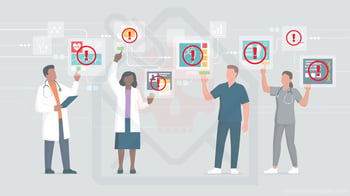
A cyberattack creates technical problems. Duh. But more importantly, it likely interrupts daily operations that make it harder for you as the healthcare professionals to do your job. When systems become unavailable, staff lose access to the information they need which means scheduling delays can occur and communication may slow down. In serious situations, disruptions can even affect the delivery of patient care.
It's no secret that healthcare facilities are always a frequent target for cybercriminals. Federal reports show, once again, that attacks are increasing against the healthcare sector because threat actors want the valuable patient information stored in your hardware.
The U.S. Department of Health and Human Services has adopted the message that "Cyber Safety is Patient Safety" because strong cybersecurity helps protect both healthcare operations as well as patient needs. So maybe you're thinking it's time to evolve that cyber strategy you've been nursing (pun intended) since COVID.
Key Factors When Rethinking Your IT Strategy
You need to either be able to do these yourself, or partner with someone who can.
- Conduct cybersecurity assessments
- Improve HIPAA compliance readiness
- Monitor systems for suspicious activity
- Respond to security incidents
- Protect sensitive patient information
AI Is Changing How Healthcare and Emergency Centers Operate
AI is an opportunity to reduce the administrative burdens that take time away from patient care. People across industries are exploring ways AI can support workflows by helping employees access information more quickly. The goal in healthcare is to help you spend more time focused on patients.
Research from HIMSS shows that healthcare organizations are moving from AI awareness and dabbling toward active adoption. Like other industries, leadership evaluates how AI can improve workflows while supporting employees throughout the transition. At HIMSS 2025, healthcare research experts focused heavily on real-world AI use cases involving workflow improvement, patient engagement, clinical decision support, and operational efficiency. They also hit home on the importance of governance and cybersecurity as organizations expand their use of AI technologies.
That might sound like a long laundry list of to-dos for your practice or facility, but successful AI adoption has to start with a strong technology foundation.
Better Data Creates Better Outcomes
Healthcare facilities collect more information than ever before. The challenge, therefore, is turning that information into something useful without losing sight of compliance requirements.
AI can help free-standing or individual healthcare providers identify trends more quickly. Hospital leadership easily access operational performance to report on in board meetings. Clinicians can access relevant patient information faster. Basically, you'll spend less time searching for data and more time serving patients. Even the World Health Organization supports digital health initiatives because better use of data creates the better outcomes for patients they want to be known for.
On the flip side of that "Pandora's Box," patient data is always at risk and needs to be locked down correctly. Strong disaster recovery planning will always be essential because the healthcare industry continues to face evolving threats from attackers who are also using AI to find back doors in your systems. Basically, as they evolve, so must you.
Compliance Requirements continue to change and grow
Healthcare providers must always evaluate the risk when implementing something new or updating their IT strategy. There should be a high focus on security controls and maintaining compliance with evolving requirements. That can be tricky, but it's the gold standard for keeping your hospital out of the news.
The Department of Health and Human Services continues encouraging the healthcare industry to implement cybersecurity performance goals that strengthen preparedness and improve resilience against common threats. These recommendations are designed to help healthcare organizations prioritize protections that reduce risk and support patient safety.
A trusted IT partner can help healthcare organizations understand these requirements while building a practical roadmap for compliance and cybersecurity improvement.
Why Healthcare Orgs Partner With Centre Technologies
You need systems that remain available when patients need care and strong security controls that protect sensitive information. Beyond that, guidance as you evaluate AI and other emerging technologies. And maybe it'd be nice when you pick up the phone or submit a support ticket, that you're talking to the same team who knows your name. There's support and then there's trust.
Centre Technologies helps healthcare providers strengthen their cybersecurity while supporting HIPAA initiatives, so you know you're appropriately preparing for the future. We offer both strategic guidance and proactive IT support, you healthcare facilities can modernize with confidence while keeping patient care at the center of every decision. Basically, how it should be.
If that sounds enticing, give us a call.
Looking Ahead
Healthcare is entering a new era. AI is creating new opportunities for providers and digital health initiatives continue to reshape patient expectations. But at it's core, cybersecurity remains a growing concern across the industry.
The facilities that achieve the greatest success will not simply adopt new technology. They'll build a strong foundation that supports long-term growth. They'll create secure environments that allow innovation to happen safely. Most importantly, they'll align technology decisions with the ultimate goal of delivering better patient care.
And frankly, we'd love to help you with that.